



Introduction
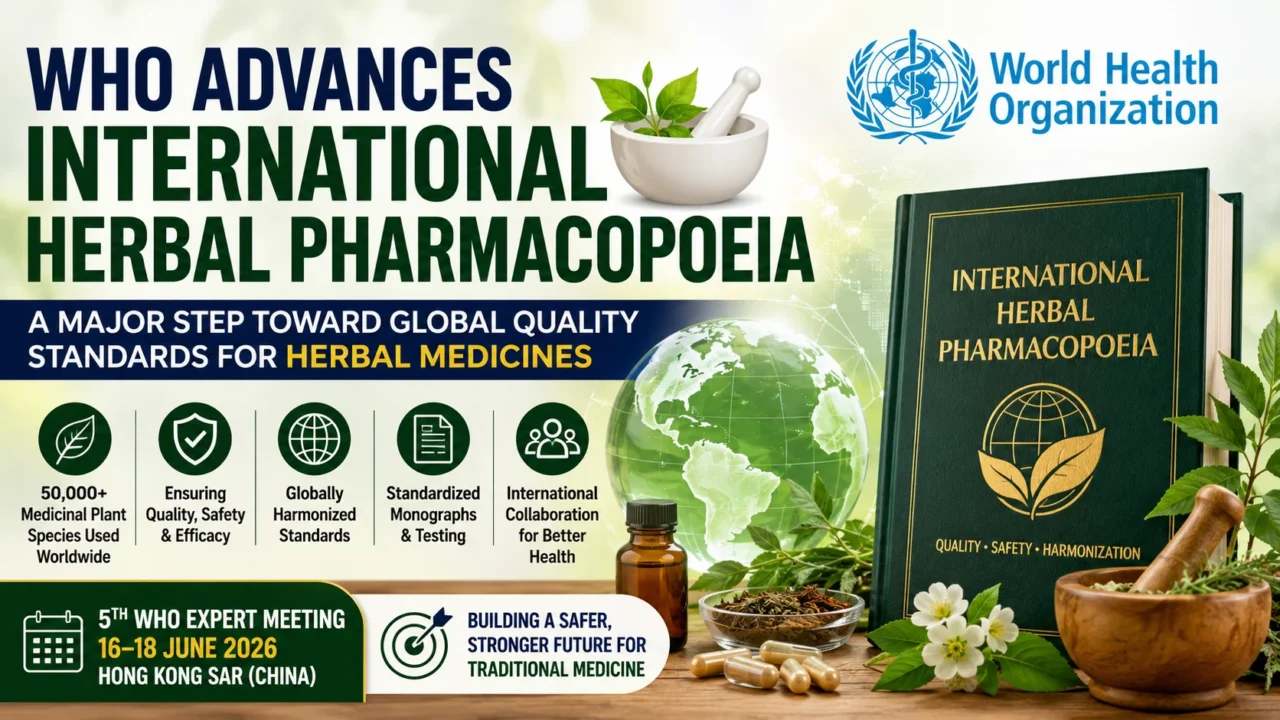
The World Health Organization (WHO) has taken a landmark step toward improving the global quality, safety, and regulation of herbal medicines by accelerating the development of an International Herbal Pharmacopoeia (IHP). During the 5th WHO Expert Meeting, held in Hong Kong SAR (China) from 16–18 June 2026, experts from all six WHO regions came together to discuss and advance internationally harmonized standards for herbal medicines.
This initiative is expected to transform the way herbal medicines are regulated, manufactured, and traded across the world, benefiting governments, healthcare professionals, researchers, manufacturers, and, most importantly, patients.
What is the International Herbal Pharmacopoeia?
The International Herbal Pharmacopoeia (IHP) is a global scientific reference that will establish standardized quality specifications for herbal medicines. It will contain official monographs describing the identity, purity, quality requirements, analytical methods, and testing standards for medicinal plants used worldwide.
Countries will be able to adopt or adapt these standards within their national regulatory frameworks, creating greater consistency in the regulation of herbal medicines.
Why is WHO Developing the IHP?
Traditional medicine continues to play a vital role in healthcare across the globe. According to WHO:
- More than 50,000 medicinal plant species are used worldwide.
- Billions of people rely on herbal and traditional medicines for primary healthcare.
- Herbal medicines are particularly important in low- and middle-income countries.
Despite their widespread use, significant differences exist in quality standards, testing methods, and regulatory requirements between countries. These variations have made it challenging to ensure the consistent safety, efficacy, and quality of herbal medicines in international markets.
The International Herbal Pharmacopoeia aims to address these challenges by creating globally accepted scientific standards.
A Key Initiative Under WHO Global Traditional Medicine Strategy 2025–2034
The development of the International Herbal Pharmacopoeia is one of the major priorities of the WHO Global Traditional Medicine Strategy 2025–2034.
The strategy focuses on:
- Strengthening regulatory systems
- Improving quality assurance of herbal medicines
- Supporting evidence-based traditional medicine
- Promoting international harmonization
- Enhancing patient safety
- Encouraging responsible integration of traditional medicine into national healthcare systems
The new pharmacopoeia will serve as a foundation for achieving these goals.
International Collaboration Driving the Initiative
The success of the International Herbal Pharmacopoeia depends on strong international collaboration.
During the expert meeting, technical support was provided by several leading organizations, including:
- Chinese Medicine Regulatory Office of Hong Kong SAR
- WHO Collaborating Centre for Traditional Medicine
- Pharmacopoeia Commission for Indian Medicine and Homoeopathy (PCIM&H), Government of India
These organizations are contributing scientific expertise, drafting standardized herbal monographs, and developing internationally accepted analytical methods for medicinal plants.
India’s participation is particularly significant due to its rich heritage in Ayurveda, Siddha, Unani, and other traditional medicine systems.
What Will the International Herbal Pharmacopoeia Include?
The proposed pharmacopoeia will provide comprehensive scientific standards for herbal medicines, including:
- Botanical identification of medicinal plants
- Authentication methods
- Purity requirements
- Quality specifications
- Chemical profiling
- Marker compounds
- Analytical testing procedures
- Good quality control practices
- Standardized monographs
- Recommended laboratory methods
These standards will help ensure that herbal medicines meet internationally recognized quality benchmarks.
Benefits of the International Herbal Pharmacopoeia
The development of globally harmonized standards offers several important benefits.
Improved Patient Safety
Standardized quality requirements will reduce the risk of contaminated, adulterated, or substandard herbal medicines entering the market.
Better Product Quality
Manufacturers will have access to internationally accepted specifications, leading to more consistent production practices.
Stronger Regulatory Systems
National regulatory authorities can use the pharmacopoeia to strengthen approval processes and quality control.
Increased International Trade
Common standards will reduce regulatory barriers and facilitate global trade in herbal medicines.
Greater Scientific Credibility
The initiative will promote evidence-based traditional medicine and encourage further scientific research.
Enhanced Public Confidence
Healthcare professionals and consumers will have greater confidence in the safety and effectiveness of herbal medicines.
Technical Discussions During the WHO Expert Meeting
Experts participating in the meeting discussed several important scientific topics, including:
- Development of standardized herbal monographs
- Modern analytical testing techniques
- Botanical nomenclature
- Quality control methodologies
- Selection of priority medicinal plants
- Future expansion of the pharmacopoeia
- International regulatory harmonization
These discussions represent another milestone in building a globally accepted scientific framework for herbal medicines.
Why This Matters for India
India is one of the world’s largest producers and exporters of herbal medicines and traditional medicinal products.
The International Herbal Pharmacopoeia could provide significant advantages for the Indian herbal industry by:
- Increasing global acceptance of Ayurvedic products
- Supporting exports
- Strengthening quality assurance
- Promoting scientific validation of traditional medicines
- Enhancing international regulatory recognition
The involvement of the Pharmacopoeia Commission for Indian Medicine & Homoeopathy further highlights India’s leadership in this important global initiative.
Future Outlook
The International Herbal Pharmacopoeia is expected to become one of the world’s most authoritative references for herbal medicines.
Once finalized, it will support:
- Governments
- Drug regulatory agencies
- Pharmacopoeial organizations
- Pharmaceutical manufacturers
- Herbal medicine industries
- Researchers
- Healthcare professionals
- Academic institutions
The pharmacopoeia will help harmonize international standards while ensuring that herbal medicines remain safe, effective, and scientifically validated.
Conclusion
The WHO’s initiative to develop the International Herbal Pharmacopoeia represents a historic milestone in global healthcare. By establishing internationally harmonized standards for herbal medicines, WHO aims to improve product quality, strengthen regulatory oversight, enhance patient safety, and facilitate international trade.
As traditional medicine continues to gain worldwide recognition, the International Herbal Pharmacopoeia will serve as a trusted scientific reference that bridges traditional knowledge with modern quality standards. With strong international collaboration and active participation from countries like India, this initiative is expected to reshape the future of herbal medicine regulation and promote safer, more reliable herbal healthcare worldwide.
Recommended Products